When it comes to generative engine optimization (GEO), the playing field is bigger and less predictable than traditional search. That can feel overwhelming. But here’s the good news: you have more control than you think.
In our recent report, we analyzed how GenAI tools decide which hotels to surface, and what stood out was just how much weight is placed on sources that hotels directly manage. Your website. Your content. Your brand. Your reviews. Your presence on trusted platforms. These are not just assets; they’re opportunities.
Here we break down how a hotel’s web and commercial teams can take full advantage of those opportunities to increase their likelihood of being recommended on AI platforms.
Start with your website
Our research found that 13.6% of AI citations came from hotel websites, significantly above the global average of 9% across other industries. That means your website isn’t just a marketing tool—it’s one of the strongest signals you control in the age of GenAI. But only if it’s structured the right way.
If your hotel’s website isn’t accessible, interpretable, and up to date, it won’t show up in GenAI-powered travel planning tools, no matter how beautiful your rooms or how great your service. AI engines don’t just mirror Google results. They synthesize answers based on the data they can read, understand, and trust.
But visibility is only half the equation. When travelers do land on your site, whether from an AI tool, a direct search, or an OTA, they should be able to easily book. That’s why every hotel website needs to be conversion-optimized first, ensuring that clear calls-to-action, fast load times, and mobile-friendly layouts help turn visitors into confirmed guests
Here are some tips to share with your website development team on how to make sure your site is visible—and useful—to AI.
1. Make your website AI-readable
Before AI can recommend your hotel, it needs to be able to find and read your website content. And that’s not as simple as just being “indexed on Google.” Many AI engines use different crawlers or rely on search APIs that don’t behave like traditional browsers.
One of the biggest technical hurdles is how your content is rendered. A lot of modern hotel websites rely heavily on client-side JavaScript, which means the content only loads in a user’s browser, not on the server. The problem? Most AI crawlers, including those used by ChatGPT and Claude, don’t execute JavaScript, so they might miss your content entirely.
Instead, use:
- Server-side rendering (SSR): Content is generated on the server and delivered fully formed to the user (and AI).
- Static site generation (SSG): Pages are pre-built and served as static files, ideal for speed and visibility.
- Incremental static regeneration (ISR): Combines the benefits of static sites with the ability to update content dynamically.
Think of it this way: AI needs the content to be there before it opens the page, not after a script tells it what to show.
You should also:
- Keep your sitemap clean and current so crawlers can navigate your site efficiently
- Avoid broken links (404s) that signal outdated or low-maintenance content
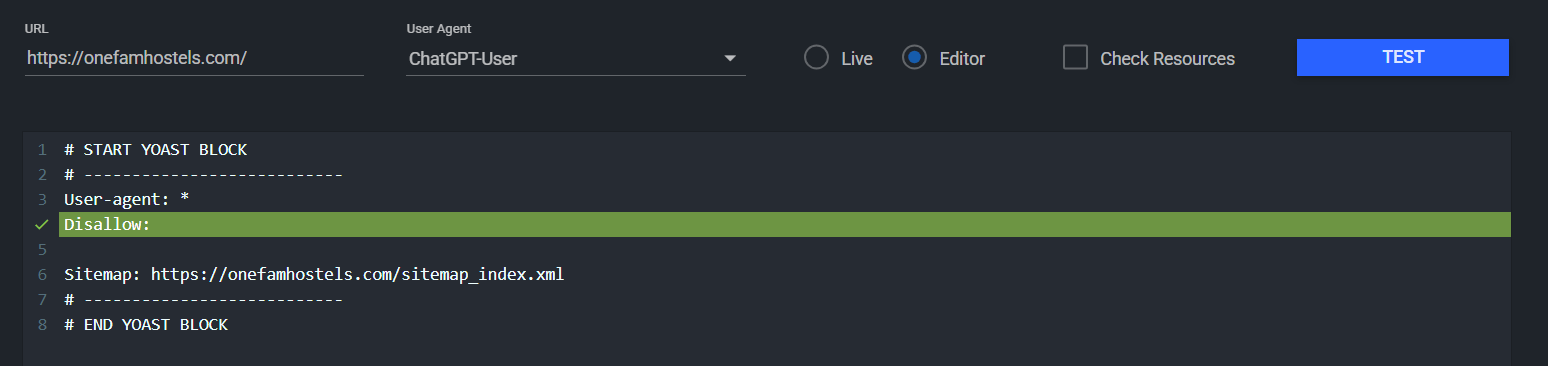
- Check your robots.txt file to make sure you’re not unintentionally blocking AI crawlers like OpenAI, Anthropic, or Google-Extended
- Enable Bing IndexNow so engines like ChatGPT can discover updates to your content faster
2. Implement structured data
Structured data (also known as schema markup) is one of the clearest ways to tell AI, “Here’s exactly what this page is about.” Unlike design or copy, structured data is written in code—usually JSON-LD—and embedded in your site to label things like:
- Property name, type, and location
- Rooms and amenities
- Check-in/check-out details
- Prices, policies, and FAQs
- Reviews and ratings
- Articles, blogs, and events
Structured data doesn’t just help with SEO, it helps GenAI engines understand and use your content with more confidence, especially when it’s included in answer boxes or knowledge summaries.
3. Prioritize performance and usability
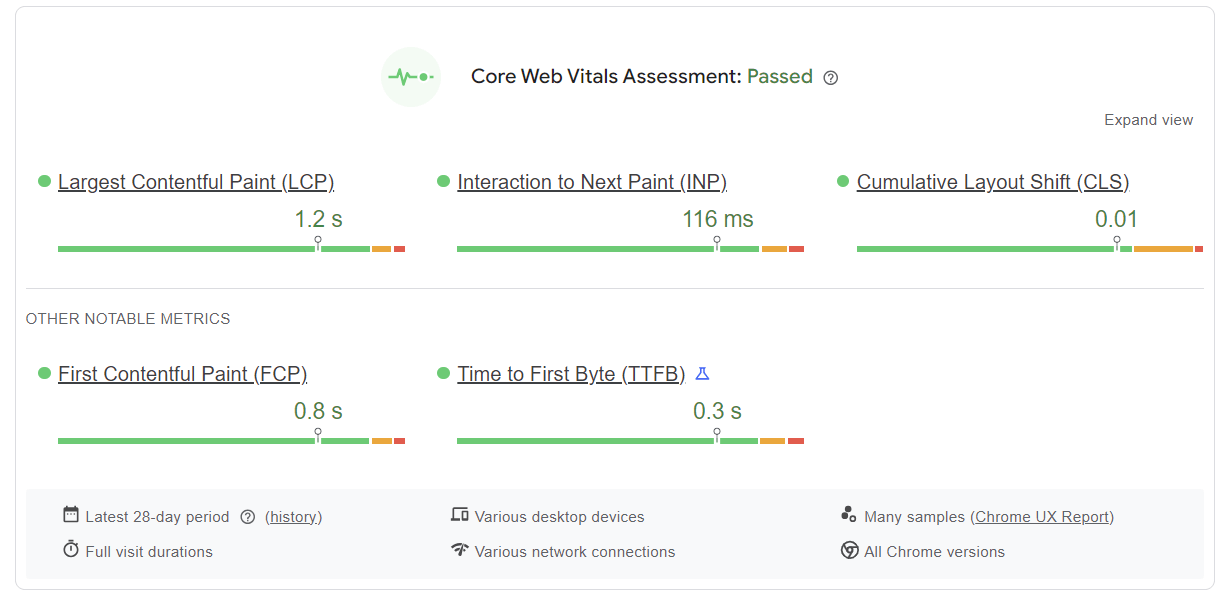
While AI engines don’t directly experience your website’s UX, poor performance can still harm your visibility. Why? Because tools like ChatGPT often rely on or are influenced by underlying search signals, including Google’s Core Web Vitals, which measure how fast, stable, and usable your site is.
Focus on:
Speed. Slow-loading pages can get skipped, deprioritized, or misinterpreted altogether. To improve speed, run your site through tools like Google PageSpeed Insights. This helps flag common issues, such as oversized images, render-blocking scripts, or slow server responses.
Mobile-friendliness. Many travelers plan their trips on mobile devices, and many AI training sets reflect that behavior. Use Google’s Mobile-Friendly Test to see how your site performs across devices. Make sure text is legible without zooming, tap targets are spaced appropriately, and layout elements adapt cleanly to smaller screens.
Clarity. Make your most important content easy to access. Avoid excessive popups, overlays, or distracting animations that could hide information from both users and AI crawlers.
Strengthen your digital authority signals
Once your technical foundation is in place, the next step is for your Commercial team to strengthen the signals that make your hotel stand out in AI-generated results.
Large language models build a multidimensional understanding of your property based on everything they can find: reviews, third-party citations, brand mentions, video content, and more.
4. Structure your content for AI
AI engines don’t just skim your site but break it down into chunks and evaluate each passage for relevance. That means your content needs to be organized in a way that’s both logically structured and semantically meaningful.
To do this, you’ll need to start with a clean, easy-to-interpret hierarchy:
- Use one H1 for your page title, followed by H2s for major sections and H3s for sub-sections
- Break up long blocks of text into short, self-contained paragraphs that express a complete idea.
- Use bullet points, numbered lists, and cue phrases like “in summary” to make key takeaways stand out.
And don’t forget multimedia. Adding alt text to your images isn’t just about accessibility, it’s also how AI engines interpret visual content. Likewise, including transcripts or SRT files with your videos helps ensure that spoken information is indexed and understood.
5. Keep your content fresh
AI engines prefer recently updated content, with newer pages more likely to be cited. This makes sense as travelers want up-to-date information, and AI tools want to reflect that.
Here’s how to stay current:
- Review and update your core pages (homepage, room types, amenities, blog posts) at least every quarter
- Add visible “last updated” dates, and implement lastmodified schema in your sitemap
- Update content to reflect seasonality, upcoming events, or policy changes that affect guests
6. Build a brand worth recommending
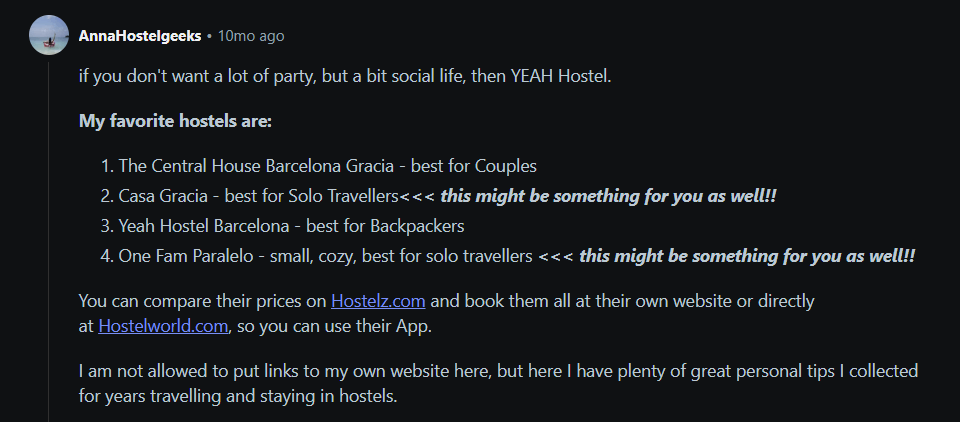
One of the clearest takeaways from our research was that AI engines prefer brands with a strong, consistent digital presence. Hotels that showed up most frequently in GenAI recommendations weren’t always the biggest or most expensive—they were the ones with recognizable names, positive reviews, and third-party validation across multiple platforms.
Here’s how to build the kind of brand that gets noticed:
- Prioritize guest reviews—both in volume and quality—on OTAs, Google, and Tripadvisor
- Encourage user-generated content (UGC), such as guest photos, testimonials, and social posts
- Seek press coverage by hosting events, partnering with tourism boards, or reaching out to local media and bloggers
- Collaborate with travel influencers who can drive both content and visibility on platforms like YouTube, Instagram, and TikTok
- Maintain a presence in forums like Reddit and Tripadvisor, where your property may be mentioned organically
- Be consistent with your property name across every listing, website, and mention
7. Demonstrate expertise with content depth
Brands must prove that their content is credible, authoritative, and useful since AI models are trained to prioritize content that reflects E-E-A-T principles: Experience, Expertise, Authority, and Trustworthiness.
To meet that standard, your content should reflect real-world knowledge and care. That starts with your core website pages, especially room descriptions. Go beyond the basics. Don’t just say what’s in the room but explain who it’s ideal for, what experience it enables, and how it connects to the guest’s intent.
It’s also why having a blog is such a powerful tool. A blog allows you to expand on topics that matter to your guests—and to AI models looking for rich, informative content. Articles like ‘A digital nomad’s guide to [your city]’ or ‘Where to eat, drink, and explore in [your city]’ help establish your authority.
To further build trust and depth:
- Include named authors or bylines wherever possible, especially for blog or editorial content
- Link to credible external sources (such as local tourism boards or travel guides), ideally within the first few paragraphs
- Incorporate multimedia such as photos, videos, and audio clips that showcase your property, team, and surrounding area
8. Diversify your distribution channels
AI engines learn from patterns across the web. The more places your hotel appears—and the more consistent those listings are—the more likely you are to be recommended.
Your distribution strategy should include:
- A conversion-optimized, crawlable website as your foundation
- Listings on major OTAs like Booking.com, Expedia, and Airbnb
- Niche OTAs that match your audience or location—think luxury, eco-travel, or ski platforms.
- Metasearch platforms such as Google Hotel Ads, Trivago, and Kayak, which often surface in GenAI training data
- Tour operators and bundled travel sites, especially for properties in high-demand destinations
- Social media profiles with active links to your booking engine
The more often your brand appears online, in a context that makes sense, the higher the likelihood that you’ll be recommended in relevant searches.
9. Write content that answers real user questions
AI doesn’t just respond to keywords, but it interprets intent.
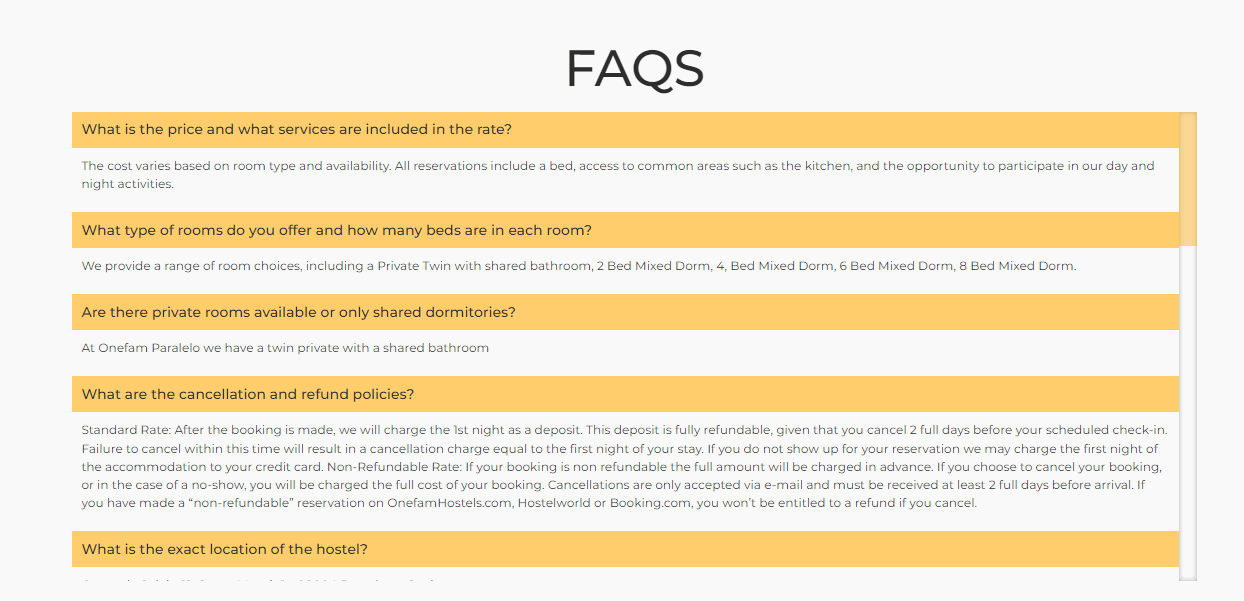
For example, when a traveler asks, “Where should I stay in Barcelona for a solo trip near the beach with good Wi-Fi?”, the AI doesn’t look for an exact phrase match. Instead, it pulls in related context: Which hotels are near the beach? Which ones mention solo travel, remote work, or fast internet? Which ones feel like a good fit based on reviews, amenities, and guest type?
This process is what’s known as query fan-out (expanding the original question to related ideas) and latent intent (identifying what the traveler actually wants). To show up in these types of nuanced recommendations, your content needs to reflect how people think, not just how they search.
To do this:
Anticipate follow-up questions and add content that addresses them, like comparisons, tips, or insider details travelers might ask next.
Write in natural, conversational language, not stiff marketing jargon.
Cover topics holistically—don’t just describe your rooms, explain who they’re for, what they’re near, and why they’re a great fit.
Use self-contained content blocks, like short paragraphs that can stand alone. AI engines often extract just a few sentences, so each one should be meaningful on its own.
Include the “why” and “who it’s for” in your descriptions. For example: “Our deluxe rooms are ideal for couples looking for a quiet, romantic escape after a day at the nearby ski slopes.”
Visibility is earned
Generative AI is changing how travelers discover and choose hotels—and fast. Where SEO was once about rankings, GenAI is about reasoning. It’s not enough to show up in search. You have to be the answer.
The good news? You don’t need to overhaul your entire strategy overnight. With the right technical foundation, a clear brand presence, and content that reflects what travelers actually care about, your hotel can start showing up in more recommendations.