The four largest OTAs spent $20 billion on sales and marketing in 2025. Your property was part of their inventory.
That’s the reality of hotel advertising: visibility increasingly belongs to whoever can reach travelers across the most channels, at the right moment, with the right message. Travelers don’t discover hotels in one place anymore. They move across Google Search, Maps, YouTube, Gmail, Display, and social platforms throughout the planning journey weeks before they’re ready to book.
For hotels, managing visibility across all of those surfaces used to require multiple campaigns, large budgets, and significant advertising expertise. Google Performance Max for travel goals — Hotel PMax — changes that.
This guide covers what Hotel PMax is, how it works technically, and how Cloudbeds has built it directly into the platform so hotels can run it without a performance marketing team.
What is Performance Max for Travel Goals?
Performance Max for Travel Goals (Hotel PMax) is a Google Ads campaign type specifically designed for hotel advertisers.
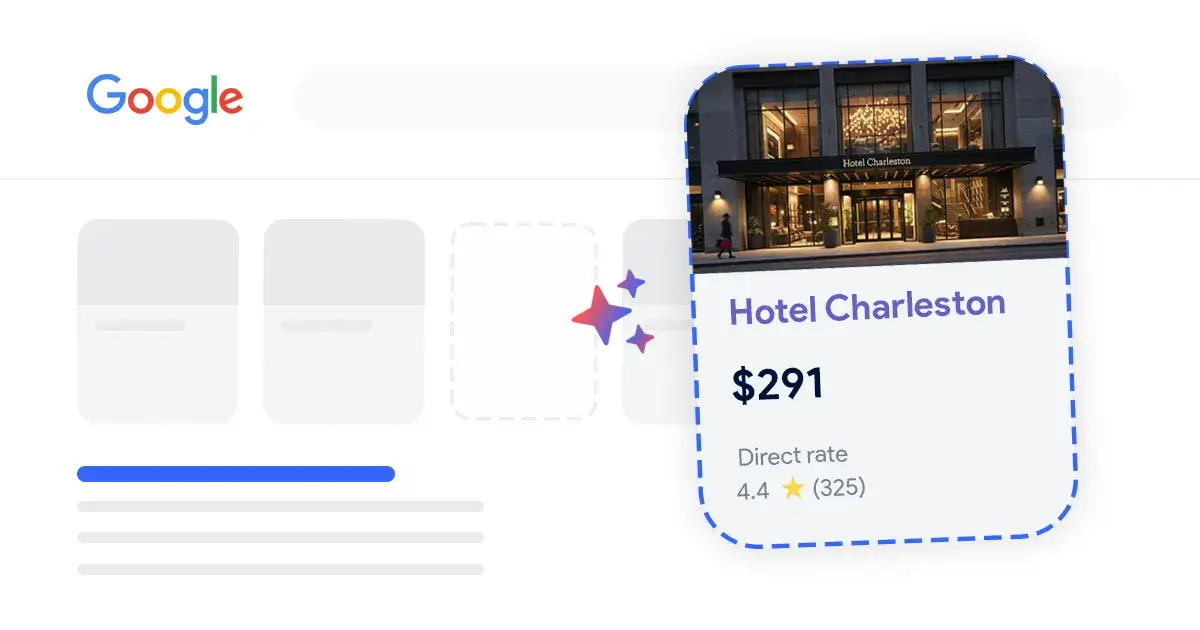
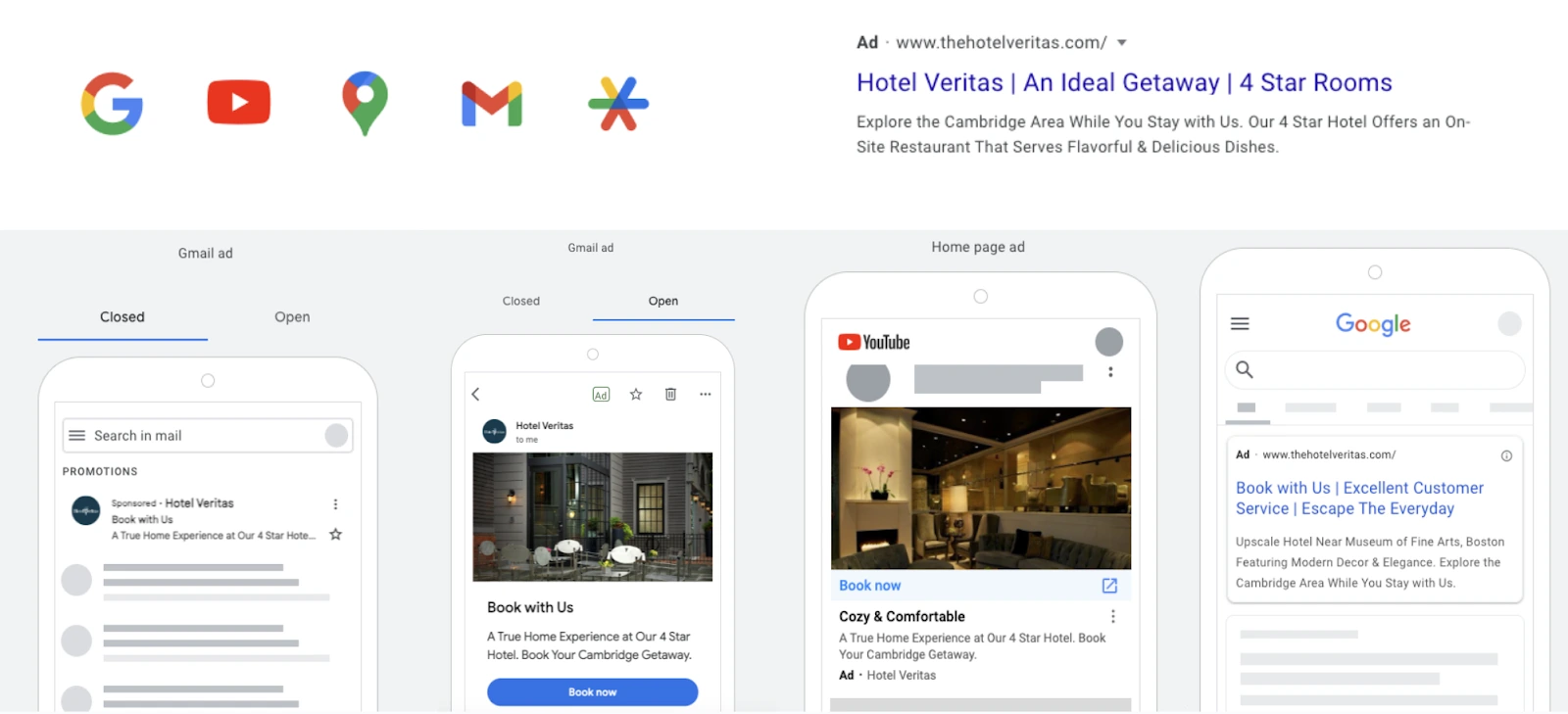
It uses Google AI to run personalized ads across every Google surface, including Search, Google Maps, YouTube, Gmail, Display, and Discover from a single campaign setup. Unlike standard PMax campaigns, Hotel PMax includes travel-specific features: property-level reporting, real-time rate and availability display, travel intent audience signals, and hotel-specific creative optimization.
The campaign goal is direct bookings, and Google’s AI continuously optimizes bidding, audience targeting, creative delivery, and budget allocation to achieve it.
Why Hotel PMax matters right now
Google ended commission-based bidding for hotel metasearch in 2024. Hotel properties that relied on the cost-per-acquisition model — paying only on completed bookings — had to shift strategies. Performance Max for Travel Goals emerged as the logical next step as a campaign type that gives hotels full-funnel Google coverage under a CPC/target ROAS (return on ad spend) model, with AI doing the optimization work that previously required dedicated expertise.
The scale difference between OTAs and independent hotels on Google advertising is significant, but it’s largely a technology gap, not just a budget gap. OTAs have engineering teams dedicated to building and maintaining their Google Ads infrastructure. They run thousands of campaigns simultaneously, feed vast amounts of conversion data into Google’s algorithms, and benefit from machine learning that has been training on hospitality performance data for years.
Performance Max for Travel Goals campaigns narrows that gap by giving individual properties access to the same Google AI infrastructure. Advertisers using Performance Max campaigns see an average increase of 18% in total incremental conversions at a similar cost per action, according to Google. That’s a meaningful lift without increasing spend and comes from Google’s AI finding higher-quality placements, better-timed bids, and more relevant audience segments than a manually managed campaign would identify.
18%
increase in total incremental conversions for PMax
How Performance Max for Travel Goals works
Hotel PMax simplifies running coordinated campaigns across multiple Google channels while constantly optimizing bids, creative, audiences, and budget allocation in real time.
The multi-surface reach
The defining feature of Hotel PMax is what it does to campaign complexity. Before PMax, reaching travelers across all of Google’s advertising surfaces required separate campaigns: a search campaign, a display campaign, a YouTube campaign, and a hotel ads campaign. Each with its own bidding logic, creative requirements, and reporting.
Hotel PMax consolidates all of that into a single campaign. One setup, one budget, one goal and Google’s AI determines how to distribute spend across Google’s platforms based on what’s most likely to generate a direct booking for your property.
Travel-specific audience signals and targeting
Hotel PMax isn’t just a generic PMax campaign applied to the travel industry. It uses Google’s hotel data and travel-specific planning signals to find potential guests who are actively researching your destination.
The targeting inputs include:
- Property attributes — location, star rating, amenities, and property type, which Google uses to match your listing to relevant searches
- Travel intent signals — Google’s planning data identifying users who are actively comparing hotels for a specific destination and travel window
- Audience signals — your own data, including guest email lists, which guides Google’s machine learning toward your highest-value guest profiles
- Search themes — keywords related to your property name, location, and travel intent that help orient the algorithm early in its learning phase
This is one of the key differences from generic display advertising. Every impression is served against the backdrop of travel planning intent. Your ad isn’t interrupting their day; it’s appearing in the middle of their research.
Real-time optimization and bidding
Hotel PMax’s AI continuously adjusts across several dimensions simultaneously:
Bid optimization — bids are adjusted dynamically based on demand signals, competitive pricing, availability, and the predicted booking probability for each impression. During high-demand periods (a local festival weekend, a major event nearby), bids increase automatically to protect your visibility. During low-demand windows, spend is preserved for when it matters more.
Asset optimization — Google tests different combinations of your headlines, descriptions, images, and videos across different placements and audiences. Over time, the system identifies which combinations reach your conversion goals and prioritizes them. A room image with current pricing may outperform a property exterior on Search; a video walkthrough may drive longer engagement on YouTube. The algorithm learns and adjusts.
Budget allocation across surfaces — Google shifts budget to whichever surfaces are generating the most hotel bookings at any given moment. You set a total daily budget; the system decides whether to concentrate it on Search, Maps, YouTube, or Display based on live performance data.
Demand forecasting — the campaign incorporates signals like historical booking patterns, upcoming events, and current search volume trends to anticipate demand and proactively adjust bids before a surge hits.
Property-level reporting
For hotels running new campaigns across multiple properties, Hotel PMax provides per-property performance reporting, a feature not available in standard PMax campaigns. You can see ROAS, bookings, impressions, and conversion data broken out by property, making budget allocation and optimization decisions across a portfolio significantly more tractable.
Even for single-property operators, the reporting model is built to close the attribution loop: every booking generated by a Hotel PMax campaign is linked to a unique transaction ID in your PMS, so the revenue impact of your ad spend is traceable at the reservation level.
Optimizing your Hotel PMax campaign
Like most AI-powered advertising platforms, Hotel PMax performs best when the fundamentals are strong.
Rate competitiveness
Hotel PMax drives clicks to your booking engine; your rates determine whether those clicks convert. If your direct rate is higher than OTA rates for the same room and dates, the campaign will generate traffic that doesn’t convert and waste budget.
Before running Hotel PMax (or any ad campaign), ensure your direct rate is genuinely competitive with what’s visible on OTAs, and consider adding direct-booking value that isn’t easily replicated: flexible cancellation, room upgrades, complimentary breakfast, or early check-in.
Keep campaigns funded continuously
The single most impactful operational decision for Hotel PMax performance is keeping the campaign continuously funded. Each time a campaign pauses due to depleted credits and then restarts, Google’s AI learning period resets. The algorithms have to re-accumulate conversion data to optimize effectively, which means the first few weeks after each restart underperform what the campaign would have achieved if it had never stopped.
Every time your campaign stops and starts because it ran out of funding, it essentially resets that learning period.
Build asset depth over time
Google’s AI performance is directly proportional to the creative material it has to work with. A campaign with 3 headlines and 2 images is far more constrained than one with 15 headlines, 5 long headlines, 4+ descriptions, 10+ high-quality images across formats, and multiple videos.
Because Hotel PMax runs across Google’s ecosystem, campaigns need creative assets that work across different placements, screen sizes, and stages of the booking journey. Strong-performing campaigns typically include:
- Room photography
- Exterior and amenity imagery
- Lifestyle visuals
- Vertical, square, and horizontal image formats
- Short-form video walkthroughs
- Promotional headlines
- Direct-booking messaging
- Seasonal or package-specific creative
The more variety you provide, the more combinations Google’s AI can test and the better it becomes at matching the right creative to the right audience at the right time.
Use audience signals strategically
When you upload your guest list as an audience signal, you’re giving Google’s AI a head start. Instead of learning from scratch what kind of traveler converts at your property, the algorithm starts with a profile of your best existing customers and finds new travelers who match that profile. For properties with meaningful guest databases, this can compress the learning period and improve targeting quality from the start.
Search terms — keywords related to your property name, location, and travel intent — work similarly. They orient the algorithm early, particularly useful during the first 6–9 weeks when the campaign is still accumulating conversion data.
Set location targeting carefully
One of the most commonly overlooked Hotel PMax configuration decisions is location targeting. Setting targeting to “presence” (showing ads only to people physically located in or actively researching from your target geographies) typically outperforms “presence or interest” (which can include users who casually browsed content related to your target location).
PMax for Travel Goals vs. Other hotel advertising campaign types
| Hotel PMax | Metasearch Ads | Retargeting |
| Best for | New audiences + full-funnel reach | High-intent rate comparison moments | Bringing past website visitors back to book |
| Google surfaces | Search, Maps, YouTube, Gmail, Display, Discover | Google Hotels | Google Display Network |
| Bidding | Target ROAS or maximize conversions | CPC to booking engine | CPM / impression-based |
| Creative | Images, video, headlines, descriptions | Rate + property listing | Display banners and responsive ads |
| Audience targeting | AI-optimized + audience signals | Travel date/destination intent | Past website and booking engine visitors |
| Learning period | 6–9 weeks to full optimization | Faster / lower complexity | Moderate |
| Best stack position | Volume and new-audience layer | Foundation / highest-intent capture | Conversion and re-engagement |
The important takeaway from this comparison: these campaign types are not substitutes for each other. Hotel PMax helps hotels reach new travelers earlier in the planning journey across Google’s full advertising network. Metasearch captures high-intent travelers actively comparing rates and booking options. Retargeting brings past website visitors back after they leave without booking.
Properties that build a direct booking program systematically — layer by layer — see dramatically more revenue without the commissions. Stack, don’t skip.
How Cloudbeds supports Hotel PMax
Cloudbeds has built Hotel PMax natively into the platform, which means the setup, management, and reporting all happen in one place rather than requiring a separate Google Ads account or an external agency.
Cloudbeds layers two AI systems:
- Google AI handles the performance optimization layer directly in the platform — bidding strategy, audience targeting, creative delivery, and budget allocation across Google’s ad network. This is the same infrastructure available to major hotel chains and OTAs.
- Cloudbeds AI handles the setup and asset layer — automatically generating campaign-ready headlines, descriptions, images, and logos from your property’s existing web presence, Google Business Profile, and brand assets.
This dual-AI approach is what makes Hotel PMax accessible to properties without much digital marketing expertise.
The technical complexity of building and launching a PMax campaign which would normally require knowledge of asset group structure, audience signal configuration, conversion tracking setup, and bidding strategy selection is abstracted behind a setup flow that any user can manage.
Campaign setup inside Cloudbeds
Hotels can control campaign visibility and budget directly within the platform, while Cloudbeds and Google AI handle much of the complexity behind the scenes including audience targeting, bid optimization, asset delivery, and performance optimization across Google’s advertising network.
The platform also automatically generates campaign-ready assets using your property’s existing website content, Google Business Profile, and brand imagery. Hotels can use these as-is or customize headlines, descriptions, images, and logos before launching campaigns.
Since Hotel PMax improves over time, Google’s AI needs continuous performance data to optimize bidding and targeting effectively, which means campaigns generally perform best when they run consistently over a 6–9 week learning period without interruption.
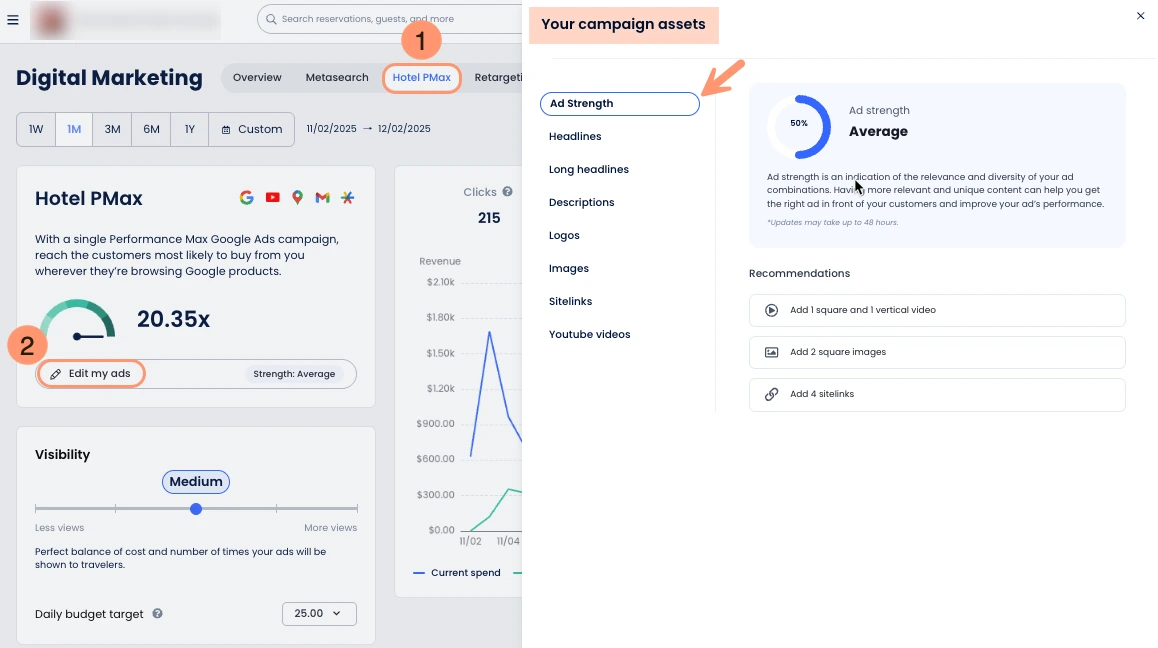
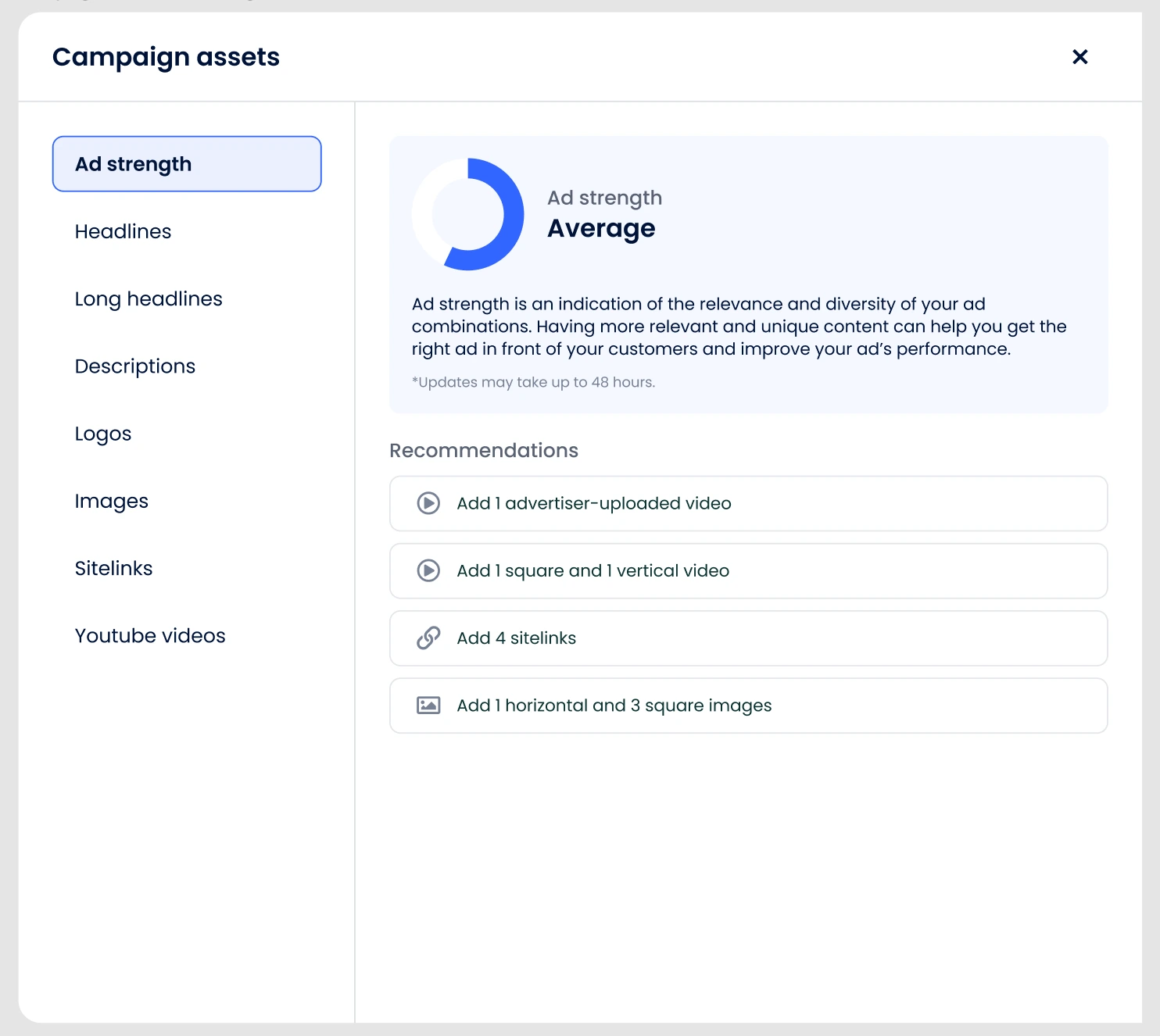
Ad strength: The optimization signal to watch
Inside the Hotel PMax dashboard, ad strength is the primary indicator of how well-configured your campaign is. The system rates your campaign as Poor, Average, Good, or Excellent based on the diversity, quality, and quantity of your creative assets.
Higher ad strength correlates directly with better performance — more asset combinations mean Google’s AI has more material to test, which leads to better-matched ads for different audiences and placements.
Unified campaign visibility
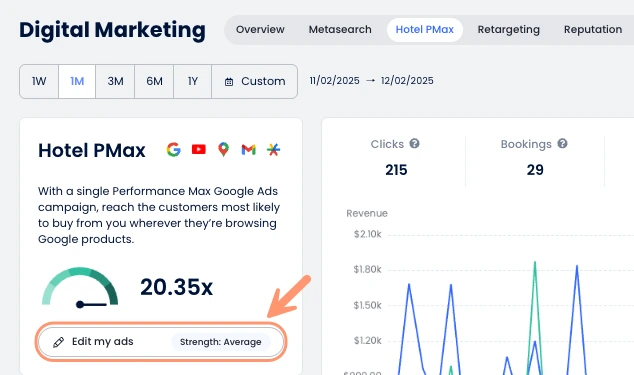
The Hotel PMax dashboard gives hotels a centralized view of campaign performance making it easier to understand how campaigns are impacting bookings over time.
Hotels can track key metrics like clicks, bookings, revenue, ROI, and ad strength from a single interface without needing separate reporting tools or manual attribution work. Performance trends can also be compared against previous periods to identify changes in visibility, booking volume, and campaign efficiency.
The dashboard also surfaces optimization signals directly inside the platform. Ad strength ratings help hotels understand how complete and competitive their campaign assets are, while built-in editing tools make it easy to refine headlines, descriptions, images, logos, videos, and sitelinks as campaigns evolve.
Visibility across Google’s ecosystem
As Google’s advertising ecosystem becomes increasingly AI-driven, visibility itself is becoming a competitive advantage. Hotel PMax helps properties participate in that shift by making sophisticated, full-funnel advertising far more accessible than it used to be.
With tools like Cloudbeds Digital Marketing, hotels can launch, manage, and measure Hotel PMax campaigns from a single platform while connecting advertising performance directly back to bookings and revenue. The result is a more connected approach to hotel marketing where visibility, conversion, and guest acquisition work together instead of operating in separate systems.
Key takeaways
- Hotel PMax uses Google AI to automatically run and optimize hotel ads across Search, Maps, YouTube, Gmail, Display, and Discover from a single campaign.
- Performance Max for Travel Goals helps hotels expand visibility beyond metasearch by reaching travelers earlier in the planning journey across Google’s full advertising network.
- Strong Hotel PMax performance depends on competitive direct rates, high-quality creative assets, continuous campaign funding, and enough time for Google’s AI to learn and optimize.
- The best-performing hotel advertising strategies layer Hotel PMax, metasearch, and retargeting together to capture demand, expand reach, and bring travelers back to book direct.
- Cloudbeds simplifies Hotel PMax management by combining AI-powered campaign setup, unified reporting, PMS-connected attribution, and performance optimization in one platform.
- Hotel PMax reduces the complexity of traditional Google Ads by consolidating multiple campaign types into a single AI-managed hotel advertising campaign.
- Campaign visibility, bookings, ROAS, ad strength, and attributed revenue can all be monitored from a centralized Hotel PMax dashboard inside Cloudbeds.
Visibility without the work.
With Cloudbeds, attract new guests with AI-powered advertising.