Guests don’t want generic offers. They want “you get me” moments. Smart upselling delivers exactly that and transforms your bottom line in the process.
A bottle of wine waiting on arrival. A late check-out that turns a rushed morning into a relaxed one. An early check-in that saves a business traveler two hours of killing time at the airport. These aren’t just nice touches — they’re revenue opportunities hiding in plain sight at every stage of the guest journey.
Ancillary revenue from upsells now represents more than 18% of total hotel income on average, yet it remains one of the most underutilized strategies in the hotel industry. The gap between properties that treat upselling as an afterthought and those that build it into their revenue management strategy is significant and widening.
This guide covers what hotel upselling is, why it matters, what to offer across different property types, the 12 most effective techniques, and the tools that make it scalable.
What is hotel upselling?
Upselling in the hotel industry is the practice of offering guests additional services, add-ons, or upgraded options to enhance their stay for an extra cost.
An effective upselling strategy is built around relevant offers explicitly developed for your property’s specific guest demographics. Add-ons should add genuine value to the guest experience, not just generate a line item on the folio.
The best hotel upselling doesn’t feel like selling at all. It feels like a well-timed suggestion from a host who understands what the guest actually wants.
Why is upselling important?
Upsells are mutually beneficial for hotels and guests, which is what makes them different from most revenue strategies. Guests get a more personalized, enhanced stay; properties generate meaningful incremental revenue without additional acquisition costs.
The strategic importance has only grown as hotel room rate growth stabilizes. Our 2026 State of Independent Hotels Report found that global ADR and RevPAR dropped by 5.8% and 5.4%, respectively, indicating a need for hotels to move from rate growth to profit discipline.
RevPAR grew in EMEA, but declined in all other regions.
See the full regional and country breakdowns.
Hoteliers must shift their focus from RevPAR to total revenue per guest, and upselling is the most direct lever for moving that number.
Brandie Jackson, Lead Customer Growth Manager at Cloudbeds, put it plainly during Passport:
If you’re not adding more rooms, you’ve already pushed your ADR as high as you can — how do you still grow revenue? This is where ancillary revenue comes in. Every stage of the guest journey has opportunities if you tailor them to your property’s unique strengths.
What’s the difference between upselling and cross-selling?
Upsells are enhancements to the core stay at your property. Cross-sells are products or services that extend a guest’s experience beyond your property.
Upsells include room upgrades, late check-outs, early check-ins, pet fees, valet parking, and in-room add-ons.
Cross-sells include city tours, wine tastings, airport transfers, cooking classes, and bike rentals from local partners.
Hotel management can leverage cross-selling to expand their offering without investing in additional on-site amenities. By forming partnerships with local businesses, properties keep costs low while delivering experiences that connect guests to the destination, which guests increasingly expect. A $200 room bundled with spa access or a curated local experience feels worth more than the same price for a bare-bones stay.
What should you upsell?
Upsell opportunities fall into three broad categories. The right mix depends on your property type, location, and target guest preferences, but the options within each category are extensive.
Commonly, upsells can be broken into three categories:
Hotel room upgrades and add-ons
Examples include:
- Early check-in and late check-out
- Room upgrade to a better view, larger suite, or room with premium in-room amenities (soaker tub, balcony, higher floor)
- In-room food and beverage — champagne on arrival, a bottle of wine, charcuterie board, mini bar stocking
- Pet fees for guests traveling with animals
- Romance, celebration, and special occasion packages (anniversaries, proposals, birthdays, honeymoons, family reunions)
In-property services
Examples include:
- Breakfast packages
- Welcome drinks
- Parking (valet or self-park)
- Dining experiences and restaurant reservations
- Spa treatments and spa packages
- Fitness classes, yoga, wellness programming
- Dry cleaning and laundry services
- Towel rental, locker rental, toiletry kits
Activities and off-site services
Examples include:
- Airport shuttle and transportation
- Walking tours, cultural excursions, cooking classes
- Lessons (golf, tennis, surfing, skiing)
- Bike, scooter, or equipment rentals
- Excursions to local attractions
- Multi-day experience packages for extended stays
When guests book through a self-service upsell marketplace, they spend approximately 20% more on average than when offers are presented in person. This is largely because digital self-service removes the social friction of saying yes to a staff member, guests browse at their own pace, and buy what genuinely appeals to them.
Listen to Brandie share a memorable upsell experience.
Watch the full session.
How to grow your ancillary revenue.
Upselling across property types
While certain offers work across property types like late check-outs, early check-ins, breakfast, and parking, the most effective upselling strategies are tailored to the specific guest and the specific experience they’re seeking.
Hotel upselling
Room upgrades are a top performer, particularly upgrades to a better view or a room with more space. For business travelers, dry cleaning, room service, fitness access, and express wi-fi are consistently valued — 70% of business travelers are interested in purchasing more than core hotel products, particularly because they can expense costs back to their company.
Hostel upselling
Hostel guests tend to be experience-driven and budget-conscious. Activity upsells, including walking tours, welcome drinks, group dinners, and bike rentals, convert well. Practical upsells like towel rental, locker rental, and toiletry kits also perform strongly, especially for guests who’ve packed light.
B&Bs and inns upselling
Travelers choosing a B&B want local, personal experiences. Cross-sells like wine tours, cooking classes, and farm visits fit naturally. Convenience options like airport pickup, luggage storage, and breakfast packages are reliably popular.
Vacation rental upselling
Guests staying in vacation rentals typically want autonomy. Parking, pet fees, self-guided activity packages, and contactless add-ons via a digital marketplace suit this audience well.
Regardless of property type, Brandie’s best piece of advice?
Simple classics win every time. Early check-in, late checkouts, and room upgrades are the things that every single property can do. Start with the easy wins and see where you can grow from there.
When is the best time to upsell to hotel guests?
Effective hotel upselling requires both the right offer and the right time. Offers pushed at the wrong moment — too early to feel relevant, too late to be acted on — get ignored or breed frustration. A well-timed upsell at the right touchpoint in the guest journey feels like genuine hospitality and helps increase revenue.
| Stage | Best upsell opportunities | Recommended channel |
| Discovery | Pet fees, parking, breakfast add-ons, room upgrades | Booking engine, website storefront, live chat |
| Pre-arrival | Early check-in, airport pickup, room upgrades, bottles of wine, tours | SMS, WhatsApp, email, guest portal |
| Arrival | Room upgrades (last-minute), valet parking, bike rentals | Digital check-in, front desk, kiosk |
| In-stay | Spa treatments, dining experiences, late check-out, tours, room service | SMS, WhatsApp, guest portal, in-person |
| Departure | Late check-out, airport transfer, luggage storage | SMS, automated message |
| Post-stay | Discounted return packages, loyalty offers, referral rewards | Email, guest marketing CRM |
Discovery
Promote upsell options where guests are already browsing. A storefront on your website, add-ons integrated into your booking engine, and posts on social media advertising extras all drive awareness before guests ever arrive. Customers who use live chat before making a purchase show a 40% increase in conversions, so an AI-powered chat that can answer questions and surface relevant add-ons is a meaningful direct bookings tool.
Pre-arrival
The pre-arrival window is one of the highest-converting moments for upselling. Guests are in planning mode and are excited about their trip, imagining their stay, and are receptive to offers that enhance what they’ve already committed to.
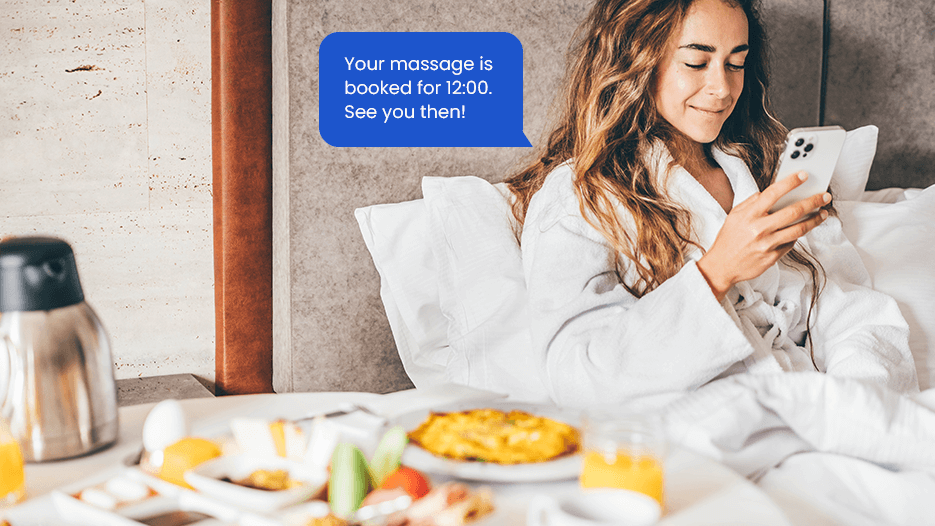
Using guest experience software, send a link to your personalized upsell marketplace a few days before arrival. Keep the offer relevant: an airport pickup for a guest flying in, a bottle of wine for a couple, a late check-out for a guest with an evening flight.
Arrival day
On arrival day, a digital check-in message can include last-minute upsell offers as part of the registration flow — room upgrades that became available, valet parking options, amenity rentals. This is also where the front desk team can make personalized upgrade suggestions based on what they know about the guest from PMS data.
In-stay
Once guests have settled in, send a check-in message asking if their experience is meeting expectations and include relevant suggestions. Spa packages, dining reservations, activity recommendations, and late check-out offers all perform well here.
Departure
A day or two before checkout, reach out about late check-out availability and transportation to the airport or train station. These are among the easiest conversions in the entire upsell stack: guests who are already comfortable in their stay respond strongly to offers that extend or smooth their departure.
Here’s where you can strengthen the relationship and extend revenue beyond checkout. Some common upsells include late checkout, luggage storage, airport transport, or even stay excursions. Convenient, low-effort ways to make guests’ departure smoother while earning incremental revenue.
Post-stay
Upsell opportunities don’t end when guests leave. Follow up with personalized loyalty offers, discounted return packages, and referral rewards. Guests who had a genuinely great stay are the most receptive audience for a well-timed return offer.
Upselling is only as good as your ability to measure and refine it. Track these metrics to understand what’s working and where to improve:
- Attachment rate — the percentage of guests who purchase at least one upsell per stay (industry target: 10–20% for most properties)
- Revenue per available room (RevPAR) from ancillary — ancillary as a share of total revenue (target: 20–30%)
- Upsell conversion rate by channel — which delivery channel (SMS, guest portal, email, front desk) converts best for your property
- Average upsell value per booking — tracks improvement over time as offer relevance improves
- Guest satisfaction correlation — ensure higher upsell spend doesn’t come at the cost of satisfaction scores; well-designed upsells should improve both metrics simultaneously
12 hotel upselling techniques
Here are 12 hotel upselling techniques to help boost revenue.
1. Personalize offers using guest data
Generic offers underperform. Use CRM and PMS data to segment guests by booking channel, stay purpose, travel party composition, past purchases, or ADR and build communications that reflect what each segment actually cares about. A business traveler and a couple on a special occasion need entirely different offers, delivered in entirely different tones.
2. Build packages that enhance the guest experience
Packages outperform individual add-ons because they bundle value and create a coherent narrative. A romance package (champagne, turndown service, late check-out, spa access) is more compelling than each element sold separately. Design packages around the reasons people actually visit your property.
3. Time your offers strategically
The right offer at the wrong moment is wasted. Build a communication sequence that matches offers to the guest’s mindset at each stage: excitement pre-arrival, comfort and discovery in-stay, convenience at departure. Don’t send upsell messages during check-in or when guests have just flagged an issue.
4. Integrate upsells into your booking engine
Make upsells part of the booking process, not an afterthought. When guests are selecting a room, surface relevant add-ons — parking, breakfast, early check-in — directly in the flow. Conversion rates are significantly higher when upsells are presented in context rather than as a separate email days later.
5. Train your front desk staff to upsell naturally
For in-person upselling to work, front desk staff need to feel confident and be equipped with the right information. Train your team on what’s available, how to frame offers as genuine recommendations rather than sales pitches, and when to offer added value. The best front desk upselling sounds like: “I noticed you’re celebrating an anniversary. We actually have one room left with a harbour view tonight. Would you like to see the difference in pricing from your standard room?”
6. Use digital self-service to drive higher conversion
Guests make different decisions when they’re not being watched. A digital upsell marketplace accessible through the guest portal, a QR code, pre-arrival message, or kiosk lets guests browse and purchase at their own pace.
During an episode of The Turndown, Ted Horner, Managing Director at E. Horner & Associates, shared how a hotel chain in Australia increased its food & beverage spend by 8% by offering in-room QR codes and handheld terminals by the pool.
Watch the full episode.
Ted Horner on navigating hotel tech ROI, AI, and the future of hotel profitability
7. Leverage group and event business for upselling
Group bookings create concentrated upsell opportunities. Work with event coordinators to offer premium liquor, florals, AV upgrades, or custom dining packages for weddings, corporate events, and family reunions.
8. Create targeted upsells for business travelers
Build a dedicated set of upsells for this segment: room service for late arrivals, express dry cleaning, enhanced wi-fi, flexible early check-in and late check-out, and fitness class packages. Offer these proactively via pre-arrival SMS or as part of the digital check-in flow.
9. Use visuals to sell the upgrade
A text-only description of a room upgrade rarely converts as well as a photo of the view from that room. In digital communications, emails, and your booking engine, use high-quality images to sell the experience rather than the spec. Show the soaker tub, the balcony, the better view, not just the room tier label.
10. Partner with local businesses for unique cross-sells
Partnering with local tour operators, restaurants, wellness studios, and artisanal producers lets you offer experiences your property couldn’t deliver alone and often generates a commission or referral revenue in the process. Guests increasingly want experiences that feel local and authentic. A curated partnership ecosystem is a genuine competitive differentiator.
11. Automate upsell delivery through hotel upselling software
Without technology, upselling is manual, inconsistent, and exhausting to maintain. The number one reason hotels don’t have an upselling strategy is a lack of technology. Hotel upselling software automates the delivery of upsell offers at the right moment in the guest journey — triggered by reservation status, arrival date, stay type, or guest segment — without requiring any manual intervention from your team.
12. Connect upselling software to your PMS
When your upselling platform integrates with your property management system, the full cycle from offer, purchase, and folio posting happens automatically. There’s no manual reconciliation, no charge discrepancies at checkout, and no disconnect between what the guest bought and what the front desk knows about them. PMS integration turns upselling from a side process into a seamless part of hotel operations.
Sample upselling script
There’s no single right channel for successful upselling: SMS, WhatsApp, email, and in-person all have their place. Here’s a pre-arrival message format that works across channels:
Hey [Guest First Name]! We can’t wait to welcome you to [Hotel Name] in just a few days. We’re getting everything ready for your stay and wanted to check — is there anything you’d like arranged in your room on arrival?
You can browse our full selection of add-ons and packages here: [link to upsell marketplace]
Just let us know if you have any questions. We can’t wait to see you!
Keep it warm, brief, and benefit-led. Never lead with pricing; lead with the experience.
6 best hotel upselling software providers
The right technology makes the difference between an upselling strategy that works and one that gets abandoned because it’s too much manual effort to maintain.
1. Cloudbeds Guest Experience
Cloudbeds Guest Experience includes a native, integrated upsell marketplace that connects directly to the PMS and booking engine. Guests access personalized upsell offers through the guest portal, pre-arrival messages, or kiosk, and every purchase posts automatically to the folio.
Because Cloudbeds operates on a shared data layer, upsell activity informs guest profiles in real time, enabling increasingly personalized offers with every stay.
2. Akia
Akia enables properties to build personalized upsell offer sequences triggered by PMS reservation data, with strong pre-arrival automation capabilities. Available via the Cloudbeds Marketplace.
3. Canary Technologies
Canary Technologies offers an integrated upselling module alongside its digital check-in and payment tools, with AI-powered offer recommendations. Available via the Cloudbeds Marketplace.
4. Duve
Duve is an end-to-end guest experience platform with a built-in AI-driven upselling system that adapts offers based on individual guest profiles.
5. Oaky
Oaky is a commission-free upselling platform used by more than 3,000 hotels across 90 countries. It automates personalized pre-arrival and in-stay offers — room upgrades, packages, experiences — with dynamic pricing based on occupancy and demand.
6. UpsellGuru
UpsellGuru takes a gamified approach by letting guests bid on room upgrades pre-arrival. The format drives strong engagement and captures willingness-to-pay data that helps properties optimize upgrade pricing over time.
Building a scalable upselling strategy with Cloudbeds
Good upselling is the downstream benefit of knowing your guests, reaching them at the right moment, and making purchase frictionless.
Cloudbeds connects the full loop. Reservation data in the PMS informs what upsell offers are relevant for each guest. The guest portal and messaging tools deliver those offers at exactly the right stage of the guest journey. Purchases post automatically to the folio. And the reporting layer shows which offers are converting, which are being ignored, and where your upsell strategy can improve.
For Brandie Jackson’s team, the principle behind all of it is simple:
Ancillary revenue isn’t about selling more. It’s about creating more value for your guests and making it easy for your team. When you have the right tools, you can start from the very beginning of that first booking click to the email that gets sent months after they stay.
Key takeaways
- Hotel upselling is one of the highest-return strategies available to independent hoteliers.
- Relevant, well-timed offers that genuinely enhance a guest’s stay improve satisfaction scores alongside revenue.
- The guest journey has upsell opportunities at every stage: discovery, pre-arrival, arrival, in-stay, departure, and post-stay.
- Guests spend 20% more on average when purchasing through self-service channels — digital upsell marketplaces consistently outperform in-person-only approaches.
- The number one reason hotels don’t have an upselling strategy is lack of technology.
- Automating delivery and integrating upsell software with the PMS is what makes a strategy scalable.
- Segmented, data-driven offers based on guest type, booking channel, and stay history consistently outperform generic campaigns.
- Post-stay upselling — loyalty offers, discounted return packages, referral rewards — is where long-term revenue and guest loyalty are built.
Upselling made easy.
Turn every booking into more revenue with Cloudbeds.