Collecting stuff is out, and collecting experiences is in. Today’s hotel guest isn’t just looking for a bed; they’re looking for a stay worth talking about.
And that shift puts the pressure squarely on hoteliers to think about every touchpoint across the guest journey, not just the moments guests spend inside their rooms.
The properties winning guest satisfaction and repeat bookings aren’t necessarily the biggest or the most expensive — they’re the ones who’ve figured out how to make guests feel genuinely known and genuinely cared for.
Here are 36 actionable ideas to enhance the hotel guest experience, organized by stage of the guest journey.
| Guest journey stage | Opportunity to improve the experience |
|---|
| Discovery | Build trust and reduce booking friction |
| Pre-arrival | Personalize communication and build excitement |
| Arrival | Deliver a seamless, welcoming first impression |
| In-stay | Create memorable moments and resolve issues quickly |
| Post-stay | Drive reviews, loyalty, and repeat bookings |
Discovery
The discovery phase sets guest expectations before you’ve ever said hello. It’s where you build trust, communicate your value, and convince travelers why your property is worth booking. Get this stage wrong, and guests won’t make it to check-in.
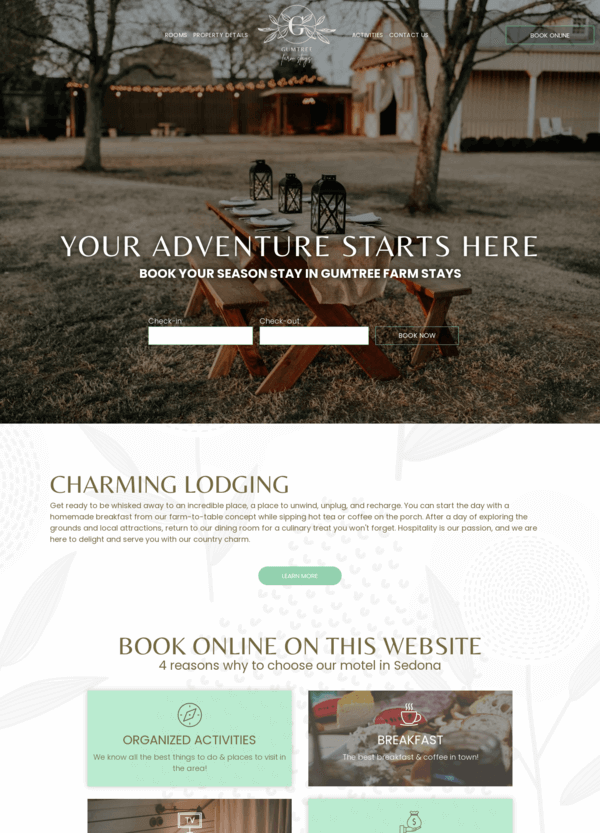
1. Build an easy-to-use, visually appealing website
Your hotel website is your digital front desk, and the first impression many guests will ever have of your property. A beautifully designed, high-performing website signals quality and builds the trust that converts browsers into bookers.
Use high-quality images, short videos, and clear language to communicate what makes you different, whether that’s your sustainability ethos, your proximity to the best hiking in the region, or your rooftop pool.
Guests who encounter a slow, outdated, or mobile-unfriendly site will bounce to an OTA before they’ve even read your room descriptions. Invest in your website like you invest in your lobby.
2. Integrate your booking engine into your website
A seamless, on-site booking engine is one of the highest-leverage improvements you can make to the guest experience before anyone ever arrives. When guests are redirected away from your website to complete a booking, you lose control of the brand experience, tracking data, and often the booking itself.
Cloudbeds’ new immersive booking engine replaces the traditional iframe model with a full suite of embedded experiences — full-page, overlay, and single-room date pickers — that live natively on your website.
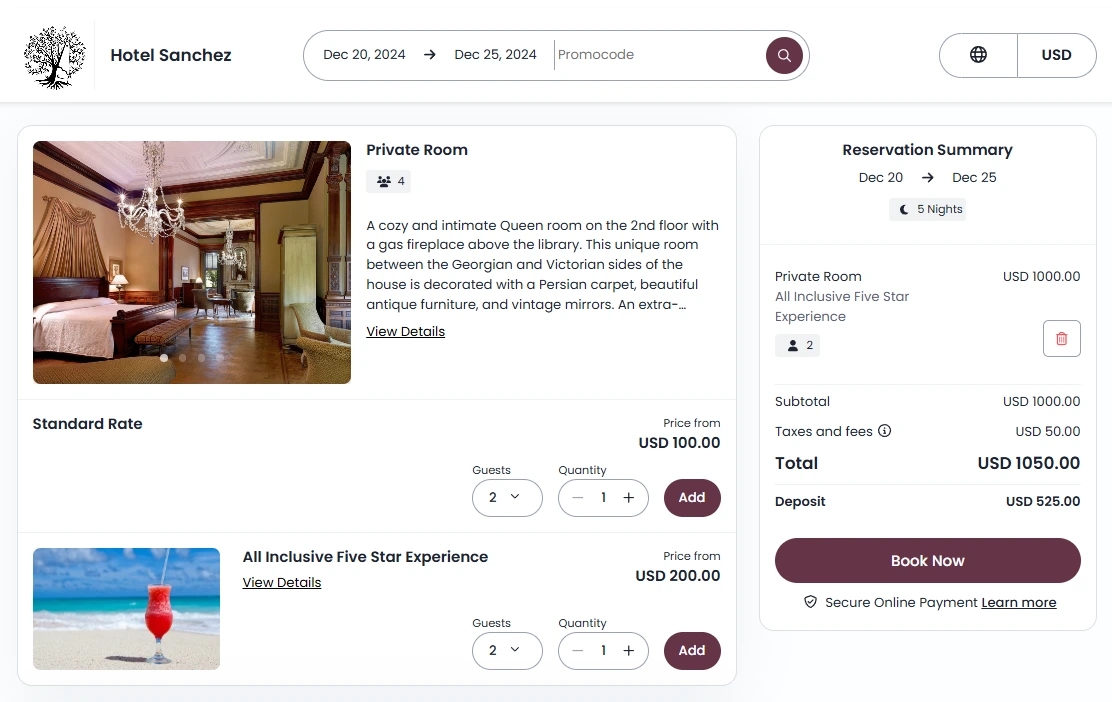
As Farrah Davis, Product Manager at Cloudbeds, shared during Compass:
We’ve replaced that one iframe with an entire full suite of premium embeds. No CSS required, no lost attribution, and no redirects — every page, every touch point, and every moment of intention can be an opportunity for engagement and conversion.
Watch the full session.
Learn how Cloudbeds’ immersive booking engine is built to convert.
3. Implement a rate checker
Travelers often spend hours bouncing between your website, OTAs, and metasearch engines trying to find the best deal. A rate checker embedded on your website lets them compare rates across platforms without leaving your site, reducing the friction that causes guests to abandon your direct channel for an OTA booking.
4. Offer multiple channels for pre-booking questions
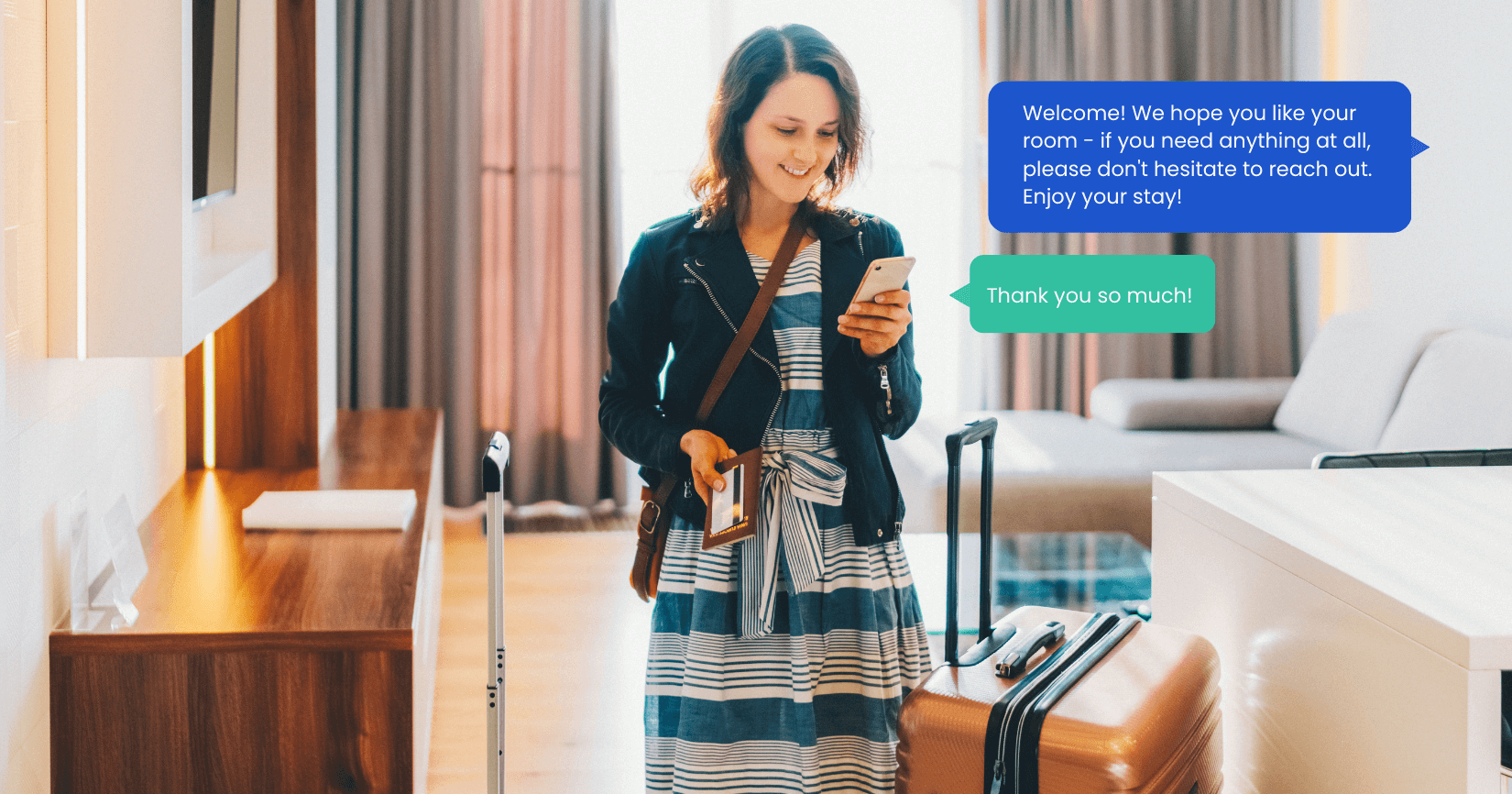
Does your property allow pets? Is breakfast included? What’s your cancellation policy? Travelers have dozens of questions before they book, and if they can’t get answers quickly, they’ll move on. Investing in multi-channel guest communication tools across WhatsApp, live chat, SMS, or AI-powered chatbots means you can mitigate hesitation in real time and convert curious browsers into confirmed guests.
Cloudbeds Guest Experience supports two-way messaging across channels, so your team can respond to pre-booking questions from wherever guests reach out, without logging into multiple platforms.
5. Add an FAQ section to your website
A well-structured FAQ page serves two purposes: it reduces the volume of repetitive questions your team has to answer, and it gives guests the confidence they need to book. Track the questions that come in via email and messaging, then publish clear answers on your site. Many travelers prefer self-service since they want the answer immediately, without having to wait for a response.
6. Ensure consistency across distribution channels
Your property appears on OTAs, metasearch engines, social media profiles, and Google Business, and inconsistency across those listings erodes trust. Outdated photos, mismatched descriptions, or conflicting amenity lists create doubt in the guest’s mind before they’ve even clicked “book.” Audit your distribution channels regularly to ensure every profile reflects your current offering and brand.
A channel manager connected to a single source of truth in your PMS makes this significantly easier to maintain.
7. Optimize for mobile and smartphones
More than half of hotel research happens on smartphones, and a growing share of bookings follow. A website that looks great on desktop but breaks on mobile is leaving direct bookings on the table. Test your site and booking engine on multiple devices regularly, as button size, load speed, and form usability on mobile can mean the difference between a booking and a bounce.
8. Offer unique inventory types
Guest expectations have evolved. Hoteliers who think beyond standard room categories — and offer inventory that solves specific guest needs — stand out. Split inventory tools allow you to combine two rooms and sell them as a suite for families needing more space, or break a larger unit into multiple bookable spaces. This flexibility lets guests book something that truly fits their trip, which drives satisfaction and loyalty from the first interaction.
Pre-arrival
The pre-arrival phase is where the best hoteliers separate themselves from the rest. It’s your opportunity to be proactive, collect preferences, build excitement, and set the tone for an exceptional stay before guests even leave home.
9. Create and maintain detailed guest profiles
Personalization at scale starts with data. Your PMS should capture and maintain rich guest profiles — stay history, guest preferences, special occasions, booking channel, communication preferences — that your team can reference at every touchpoint. A returning guest who’s greeted by name, with their preferred room type already assigned, results in a much more memorable experience.
During Compass, Ben Mouw, Senior Director of Product at Cloudbeds, introduced Ask Signals — an AI layer that draws on this profile data to give hotel teams instant, contextual answers about any guest:
A digital registration card sent before arrival is one of the simplest tools for delivering personalized service at scale. Ask guests about their preferences, like pillow firmness, dietary requirements, reason for visit, arrival time, or accessibility needs.
The responses inform everything from housekeeping setup to the greeting they receive at the front desk. These small details signal care, and they turn a generic stay into one that feels designed specifically for them.
During an episode of The Turndown, Charlie Lopez-Quintana, VP & Managing Director at ETC Hotels, shared the importance of collecting information prior to arrival.
I think the guest relations part of the pre-arrival phase continues to be the most important phase of the stay, even more than the stay itself. Everything that you can find out pre-stay, if you can execute and implement those findings, that’s what is going to make the difference.
11. Offer a pre-arrival marketplace for add-ons and upsells
The pre-arrival window is one of the highest-converting moments for upselling. Guests are in planning mode and are excited, engaged, and receptive to offers that enhance their trip. Give them a chance to pre-book spa treatments, airport transfers, tours, room upgrades, or welcome amenities before they arrive.
Brandie Jackson, Lead Customer Growth Manager at Cloudbeds, shared a perspective during Passport that captures this well:
Revenue growth doesn’t start when your guest gets into the lobby. It starts from the moment they’re clicking that book now button. The pre-stay window is a prime time for upsells — guests are in excited phase. They’re planning their trip. They’re imagining their experiences.
Watch the full session.
Beyond room revenue: How to grow your ancillary revenue.
12. Send a well-crafted confirmation email
A strong confirmation email eases post-purchase anxiety, reinforces the excitement of the upcoming trip, and opens a direct communication channel with the guest. Use warm, on-brand language, confirm the details clearly, let guests know you’re looking forward to welcoming them, and include a link to your FAQ or digital guidebook so they have everything they need at their fingertips.
13. Send local recommendations before arrival
Most guests spend time planning what to do after they’ve secured accommodation. Beat them to it: send a curated digital guide with your staff’s favorite restaurants, local attractions, transport tips, and things to see in the area. A local perspective is genuinely valuable, and it positions your property as a partner in their trip, not just a place to sleep.
This kind of pre-arrival communication also reduces the volume of questions your team fields at check-in, freeing them to focus on the welcome rather than the logistics.
14. Build excitement in the days before arrival
A short message sent two to three days before check-in — confirming the reservation, expressing genuine excitement about the upcoming visit, and inviting any last questions or special requests — does something most hotels overlook: it makes the guest feel anticipated.
This message also streamlines the check-in process. When guests share special requests in advance, your team can prepare, and the arrival moment becomes a warm welcome rather than an administrative transaction.
15. Offer travel-day add-ons to simplify guest arrival
Travel days are stressful. Delayed flights, confusing transit systems, the anxiety of arriving before check-in time opens, so anything your property can do to reduce that friction builds goodwill before the stay has officially begun. Early check-in, airport pickup, luggage storage, and last-minute room upgrades are all meaningful offerings that turn a chaotic travel day into a smooth arrival.
16. Establish and enforce maintenance and cleanliness standards
Even the most thoughtfully designed pre-arrival experience is undone by a room that isn’t ready or a property that isn’t clean. Set clear standard operating procedures for housekeeping and maintenance, and inspect proactively. Guests notice everything — a stain on the carpet, a light bulb that’s out, a bathroom that wasn’t quite cleaned. The best properties treat cleanliness not as a baseline but as a competitive advantage.
17. Build a guest experience culture with your team
Staff training is foundational. Your front desk agents, housekeeping team, and on-site staff are the guest experience; no amount of technology replaces the human warmth of a team that genuinely cares. Make sure every team member understands your property’s mission, knows what exceptional looks like, and feels empowered to go the extra mile without having to ask permission.
French Cowboys, a boutique hospitality group in Texas, puts it simply: their training goal is to get staff confident on systems as quickly as possible, not so they’re glued to a screen, but so they can focus on guests.
It generally takes about 2 to 3 days for an employee to feel totally confident navigating the system on their own. We don’t want them glued to a manual, we want them interacting with guests.
Arrival
The arrival moment is where weeks of pre-arrival investment either pay off or fall apart. This is your first real chance to deliver on a memorable stay and the impression guests form here colors everything that follows.
18. Prepare for guest arrival ahead of time
Your PMS should generate a daily arrivals report that your team can review before the shift begins. Use this time to study guest profiles, review any special requests, confirm room assignments, and prepare any personalized touches. A front desk team that knows who’s arriving — and is ready for them — delivers a fundamentally different welcome than one scrambling to catch up.
19. Greet guests by name and continue using it
This is one of the simplest and most consistently underused practices in hospitality. Using a guest’s name — at check-in, when passing them in the lobby, when delivering room service — signals recognition and respect. It’s a small gesture with a disproportionate impact on how valued guests feel throughout their stay.
Guests exist on a spectrum. Some want a warm conversation at the front desk, while others want to be in their room in under three minutes. Offering both a streamlined in-person check-in and a mobile check-in with digital room keys option via smartphone satisfies the full range of guest expectations without compromising the experience for either group.
At Après Inn Killington, the co-owners automated 100% of guest communications and eliminated the need for a 24/7 front desk — saving $55,000 per year — without a single drop in guest satisfaction scores.
For us, Cloudbeds’ guest experience — like becoming the real quarterback of everything we do here — has been an absolute game-changer.
100%
automation of guest comms.
21. Offer a brief property tour
Giving guests a quick walkthrough of your property of the communal spaces, pool location, restaurant hours, gym access, and where to find the ice machine immediately reduces anxiety and makes them feel at home. It’s an especially high-value practice for boutique properties and independent hotels, where guests may not have the reassurance of a familiar brand.
22. Write a personalized welcome letter
A handwritten or personalized welcome note left in the room is a low-cost, high-impact detail that guests consistently mention in reviews. Keep it brief, warm, and on-brand. If you know a guest is celebrating an occasion or has stayed before, acknowledge it.
23. Surprise guests with a property-specific welcome moment
The best welcome surprises are rooted in place. A Hawaiian resort might offer a fresh mai tai and lei. A mountain inn might have hot apple cider waiting by the fire. A coastal property might leave a local sea salt body scrub in the room. Whatever your version is, it should feel true to your brand and location.
It’s not about pushing products at your guests. It’s about creating experiences that they’ll never forget and want to come back and experience again.
24. Provide a digital concierge
Most independent properties can’t staff a full-time concierge, but guests still want that level of guidance and local knowledge. A digital concierge, delivered through a guest portal or pre-arrival digital guidebook, can provide curated recommendations, property information, and answers to common questions in a self-service format.
25. Add a personal touch to the in-room welcome
Use the information collected pre-arrival to personalize the in-room setup. A family traveling with young kids might appreciate a fun towel animal and a note about the pool. A couple on their honeymoon might find rose petals and a chilled bottle of wine. A solo business traveler might get a workspace cleared and a power strip ready.
In-stay
Once guests have settled in, the goal shifts from first impressions to a consistent overall experience. This phase determines whether a guest’s stay becomes memorable and whether they leave as an advocate.
26. Offer smart in-room technology
In-room technology has moved from novelty to expectation. Smart room controls — temperature, lighting, and entertainment — allow guests to customize their environment to feel genuinely comfortable. Streaming service integration lets them watch their own shows on the room TV. Reliable, high-quality wi-fi is non-negotiable for nearly every segment. Study your guest demographics to prioritize the technology investments that will have the most impact on your specific audience.
We just finished adding privacy sign lights instead of the old privacy sign. We have USB and USB-C now in both hotels, next to the beds. When we were thinking about how to do it better, we would actually go to hotels and see what we didn’t like.
27. Communicate accessibility accommodations clearly
One in five people globally has some form of impairment — visual, hearing, cognitive, or physical. Accessibility isn’t a niche concern; it’s a universal hospitality standard. Ensure accessibility features are clearly communicated on your website, train your staff on how to proactively assist guests with different needs, and make accommodations available without guests having to ask repeatedly. A property that makes every guest feel safe and comfortable earns loyalty that marketing can’t buy.
28. Train your staff in service recovery
No stay is perfect. What separates good hotels from great ones is how they respond when something goes wrong. Train your team to identify signs of dissatisfaction early, to approach complaints without defensiveness, and to resolve issues quickly. A well-handled problem can turn a frustrated guest into a loyal one and a raving reviewer. The six steps: listen, clarify, empathize, apologize, resolve, follow up.
Consider sending a brief mid-stay check-in message a few hours after arrival to catch issues before they escalate.
29. Make your sustainability practices visible
By now, most hotels have implemented some form of sustainability practice, like towel reuse programs or smart room sensors. Not only do these practices produce cost savings, but they’re important to guests — a Booking.com survey found that 53% of respondents want to travel more sustainably when they take future trips. Show guests that they made the right choice in choosing your property by publicly outlining the steps you’re taking to be more green.
53%
of travelers want to travel more sustainably
30. Enable guests to charge on-site expenses to their room
A seamless guest experience extends to how guests pay for things on property. When guests can charge a drink at the bar, a spa treatment, or a tour excursion directly to their room folio, they spend more freely and more confidently.
A POS system integrated with your PMS ensures all charges flow into a single folio — no manual reconciliation, no charge discrepancies at checkout, and no awkward moments when a guest realizes they left their wallet in the room.
31. Acknowledge and celebrate special occasions
When guests choose your property for a birthday, anniversary, honeymoon, or milestone celebration, they’re trusting you to be part of a memory that matters.
Ask about special occasions during pre-arrival communication and have a clear process for acknowledgment. A handwritten card and balloons for a birthday. A complimentary glass of champagne for an anniversary. A late check-out for a couple on their honeymoon. Small gestures in high-meaning moments create lasting impressions and generate the kind of word-of-mouth that no ad budget can replicate.
32. Partner with local vendors for unique on-site experiences
Travelers increasingly seek experiences that feel local, unexpected, and impossible to replicate elsewhere. Partnering with local vendors — food and drink producers, tour operators, artisans, wellness practitioners — allows you to offer on-site experiences that your guests couldn’t find anywhere else.
According to Booking.com, 50% of travelers seek complete culture shock and 73% want travel that pushes them out of their comfort zone. Your partnership strategy is part of your experience offering.
Brandie Jackson described a guest experience from a mountain resort that illustrates this perfectly:
“I was sent a text if I wanted to do a s’more kit when I got off the mountain. When I got there, I was blown away — they didn’t just hand me a little pre-built kit. They had an entire menu built out. Flavored marshmallows, different types of chocolates, different if I wanted cookies or crackers to build this with. That property has a little piece of my heart. I have referred it to countless friends and I already have reservations to go back this February.”
33. Offer late check-out options
Late check-out is one of the most beloved perks a hotel can offer. For guests who don’t want to leave, or whose travel home starts in the evening, the option to stay a few extra hours transforms their final experience of your property. Even if occupancy doesn’t allow it, let guests know they’re welcome to use the pool, restaurant, or lobby with their luggage stored, a final act of hospitality that shapes the last memory of the stay.
Post-stay
The guest journey doesn’t end at checkout. Post-stay touchpoints determine whether a satisfied guest becomes a loyal repeat booker, a vocal advocate, or someone who just…doesn’t come back.
34. Respond to every online review
Guest feedback in the form of online reviews is one of the most powerful marketing assets your property has, and your response to each review is a public statement about your brand. Respond to positive reviews with genuine gratitude and a personalized detail that shows you remember the stay. Respond to negative reviews with the same professionalism and care, acknowledging the issue and inviting further conversation offline.
Consistent, thoughtful review responses improve your property’s visibility on OTAs and review platforms, and they signal to prospective guests that your team is present, accountable, and genuinely invested in guest satisfaction. Cloudbeds’ Reputation Management tools help centralize and streamline this process across platforms.
35. Send a personalized post-stay message
A message sent within 24–48 hours of checkout — thanking guests for their stay, inviting feedback, and including a relevant follow-up offer — significantly increases the likelihood of repeat bookings and positive reviews. The key word is personalized: a family should receive a different message than a business traveler. A returning guest deserves a warmer acknowledgment than a first-timer.
Cloudbeds Guest Marketing pulls data directly from the PMS, so every campaign is informed by real reservation data.
I love that Cloudbeds has a tool to schedule emails for guests after they check out. Once a guest departs, they receive an email from us saying, ‘We hope you have a safe journey home. Here’s a playlist from your stay to remind you of your time with us.
36. Build a loyalty program to reward repeat guests
Repeat visits are the most profitable bookings in hospitality. A returning guest costs less to acquire, books with higher confidence, spends more freely on-property, and is far more likely to recommend you to others. A loyalty program doesn’t need to be complex; it just needs a consistent communication strategy with exclusive rates, early access to offers, and genuine recognition.
With Cloudbeds Guest Marketing, you can segment your returning guests by visit frequency, lifetime spend, or booking channel, and build campaigns that speak directly to them. A “we miss you” email sent 60–90 days after checkout, a members-only rate for their next visit, or a surprise upgrade on return — these small gestures compound into genuine guest loyalty over time.
Keep guests coming back.
Discover strategies to stay connected with guests long after checkout.
Maintaining an exceptional guest experience
Ideas don’t sustain themselves. To keep the guest experience improving over time, build these practices into your operations:
- Measure guest satisfaction consistently and track trends over time — not just star ratings, but specific feedback themes that reveal patterns.
- Monitor competitor reviews and rates to identify experience gaps you can address and opportunities where you can differentiate.
- Collect feedback from your team — front desk staff, housekeeping, and F&B have closer daily contact with guests than management does. Their observations are data.
- Invest in ongoing staff training, especially in service recovery, upselling, and the art of personalized service.
- Iterate on your processes based on what the data is telling you, and don’t wait for a major complaint to make a change.
The technology that makes it all possible
Every idea in this list becomes more powerful when it’s supported by the right technology. The challenge for most properties isn’t a lack of good intentions, but systems that don’t communicate with each other. Guest data sitting in one tool, marketing running out of another, check-in managed through a third. That fragmentation is the enemy of a seamless guest experience.
When your PMS, booking engine, guest messaging, upselling, marketing, and reporting all run on the same underlying data layer, the experience compounds. A guest’s booking channel informs the pre-arrival message. Their in-stay requests inform the post-stay offer. Their lifetime value determines the loyalty treatment they receive. Nothing falls through the cracks because nothing lives in isolation.
Cloudbeds is built as a genuinely unified platform, not a bundle of acquired tools stitched together at the login screen, but a single system where every guest interaction informs every other.
Cloudbeds allows me to control my own technology, my own marketing, and my own guest experience — all in one place.
The goal isn’t to replace the human element in hospitality. It’s to remove the friction that prevents your team from being as human as they want to be.
Key takeaways
- Exceptional guest experiences are built across the entire guest journey, not just during the stay itself.
- Small, thoughtful touches often have a bigger impact on loyalty and reviews than expensive amenities or large-scale renovations.
- Personalization starts before arrival. Hotels that collect guest preferences and proactively communicate can create more memorable stays from the very beginning.
- Travelers increasingly expect convenience, flexibility, mobile-first communication, and self-service options alongside human hospitality.
- Service recovery is one of the most important skills in hospitality. How a hotel responds when something goes wrong often matters more than the issue itself.
- Connected technology helps hotels deliver high-touch hospitality at scale by linking guest data, communication, operations, and marketing into one seamless experience.
Deliver high-touch hospitality at scale.
See how Cloudbeds connects every touchpoint of the guest journey.